Empowering Success Together
Achieve Your Goals with Our Expert Guidance
We provide comprehensive solutions and support to help you reach new heights.
Introducing the AI Digital Poster
Magellan point led the development and implementation of the AI Digital Poster at London Transport Museum, bringing together a multidisciplinary team of 40 and technology partners Reply and Microsoft.
From the initial business case and proof of concept through product design, development, testing and public evaluation, Magellan point oversaw the creation of an innovative visitor experience that transforms traditional museum content into interactive, AI-powered conversations.
The result is a configurable digital character that enables visitors to explore trusted museum knowledge through natural, multilingual conversation.
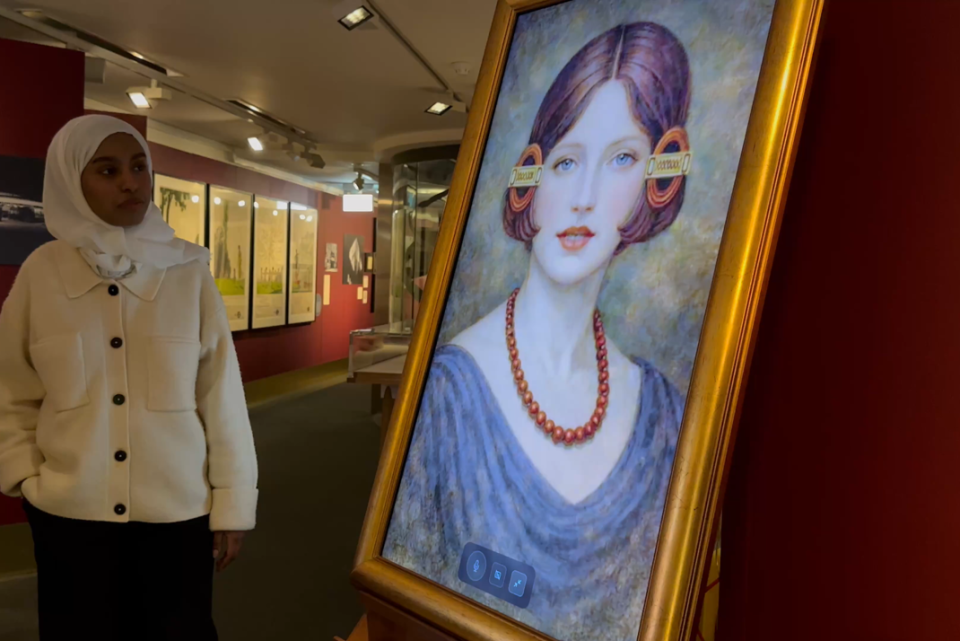
Five defining capabilities
1. Affordable, simple and quick to deploy
Browser-based technology, minimal equipment and flexible display options, including a purpose-designed podium, reducing the complexity of implementation
2. Engaging, multilingual conversations
The AI Digital Poster supports natural, spoken conversations in 57 languages, with basic conversation capabilities in over 60 additional languages, making museum collections more accessible to diverse international audiences.
3. Fully configurable visitor experiences
Character appearance, personality, voice, language, conversational prompts and calls to action can be tailored to each organisation and audience.
4. Powered by trusted organisation knowledge
Rather than simply putting a face on GPT, the poster can draw exclusively from approved content, ensuring conversations reflect the organisation’s expertise and objectives.
5. Designed for responsible operation
Configurable knowledge controls, privacy-conscious deployment and streamlined hardware support secure, sustainable operation in public environments.
London Transport Museum
Provides the collection, cultural context, specialist knowledge and real-world visitor environment.

Reply
Brings together experience, design AI engineering and technology integration to turn the concept into an engaging physical interaction.

Microsoft
Provides key AI and cloud capabilities supporting conversational intelligence and knowledge retrieval.
Transport for London
Provides the wider heritage context and governance supporting the project.
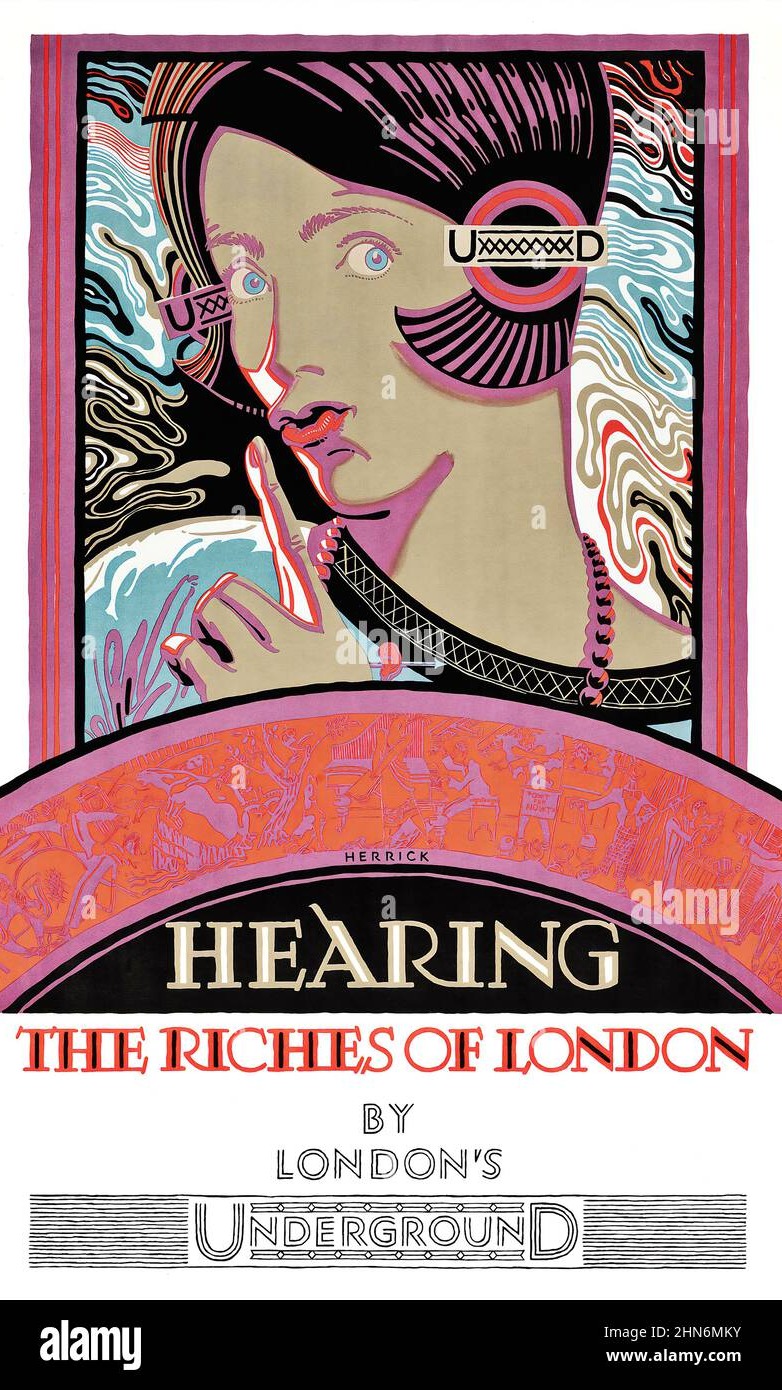
A 1927 poster that can talk to you
At London Transport Museum, an original piece of London’s design heritage has been transformed into an AI-powered digital experience, Hearing the Riches of London, created by Frederick Charles Herrick in 1927, becomes an interactive Digital Museum Expert capable of holding natural conversations with visitors.
Rather than simply reading a label, visitors can ask questions, explore the story behind the artwork, discover the world of Art Deco and learn more about London’s transport heritage through conversation.
And because the experience can communicate across 60 languages, it makes the story accessible to a far wider international audience.
But the AI digital poster isn’t limited to just museums or heritage. The avatar, personality, appearance, voice, knowledge and conversational style can be adapted to suit different brands, audiences and environments.
The London Transport Museum experience demonstrates this through a character inspired by historic artwork, but the same approach could transform almost any visual asset into an intelligent, conversational experience.
How is an AI Digital Poster created?
The London Transport Museum installation brings together creative design, conversational AI, trusted knowledge and digital animation to transform a static poster into an intelligent character visitors can talk to.
The same approach can be adapted to create an experience around your organisation, brand, products, or content.
1. Start with your character
Every experience begins by deciding who your audience will interact with.
At London Transport Museum, the character originates from Frederick Charles Herrick’s 1927 Hearing the Riches of London poster; however, this can be tailored to various characters suited to the organisation.
Your character could come from an existing campaign, archive, brand asset or illustration. There’s no need to create something from scratch or redesign your brand around the technology.
Choose your character. Connect your content. We do the rest.
4. Connect it to your knowledge
Connect the experience to an approved knowledge base and your character becomes a specialist in the subject you choose.
At LTM, that means information about the artwork, art deco and transport heritage. For another deployment, the same product can be connected to an entirely different body of knowledge.
One platform. Your character. Your knowledge.
2. Bring the avatar to life
Your chosen visual becomes an animated, conversational digital character, with AI synchronising facial and mouth movements to generated speech.
There’s no specialist hardware or complicated technical installation required. The experience runs through a browser and simply needs an internet connection – Wi-Fi or wired.
This makes it quick to deploy, straightforward to operate and easy to reproduce across different environments.
5. Shape the visitor journey
Every stage of the of the conversation can be configured to meet your organisation’s objectives, from welcoming visitors to encouraging their next action.
Tailored introductions, closing messages and calls to actions can guide visitors towards exhibitions, further learning, products or services. Built-in evaluation provides feedback on visitor engagement and opportunities for improvement.
Your audience. Your objectives. Your visitor journey.
3. Make conversation the interface
No menus, apps or complicated interfaces. Visitors simply walk up and talk.
The experience listens to their questions, understands what they want to know and responds naturally through the character, with optional on-screen captions to support accessibility and multilingual engagement.
Walk up. Ask a question. Start a conversation.
Because there is no fixed sequence, every visitor can have a different experience – without requiring additional content to be designed for every possible journey.
6. Designed to go further
The Digital Poster doesn’t have to be a permanent, one-off installation. Its modular design means the experience can be scaled up, miniaturised or moved between locations – from galleries and visitor attractions to events, exhibitions, retail environments and temporary activations.
All it needs is a screen, a browser and an internet connection.
No specialist computing equipment. No complex infrastructure. No lengthy bespoke build.
Quick to launch. Simple to run. Affordable to scale.
One experience. Many languages
The AI Digital Poster’s multilingual capabilities enable audiences from around the world to engage with the same experience through natural, real-time conversation.
As demonstrated at London Transport Museum, visitors can speak directly to the animated avatar in different languages and receive a response conversationally. rather than relying on fixed translations, separate interfaces or complicated menus, the experience can adapt to the language of the person interacting with it.
This creates a more accessible, inclusive and personalised experience, while allowing organisations to engage a diverse audience through a single digital touchpoint. The capability is particularly powerful in environments with international audiences – from museums and visitor attractions to retail, hospitality, travel, exhibitions and global events. An avatar could act as a multilingual museum host, product specialist, brand ambassador or digital concierge, with its appearance, personality and knowledge tailored to the organisation. Combined with the ability to ground the AI in trusted organisational content, multilingual conversation means the same knowledge and experience can be made accessible to a much wider audience.
One poster. Multiple languages. A world of conversations.